“But you, Gilgamesh, let your belly be full, enjoy yourself always by day and by night! Make merry each day, dance and play day and night! Let your clothes be clean, let your head be washed, may you bathe in water! Gaze on the child who holds your hand, let your wife enjoy your repeated embrace! For such is the destiny [of mortal men].” (George, 124).
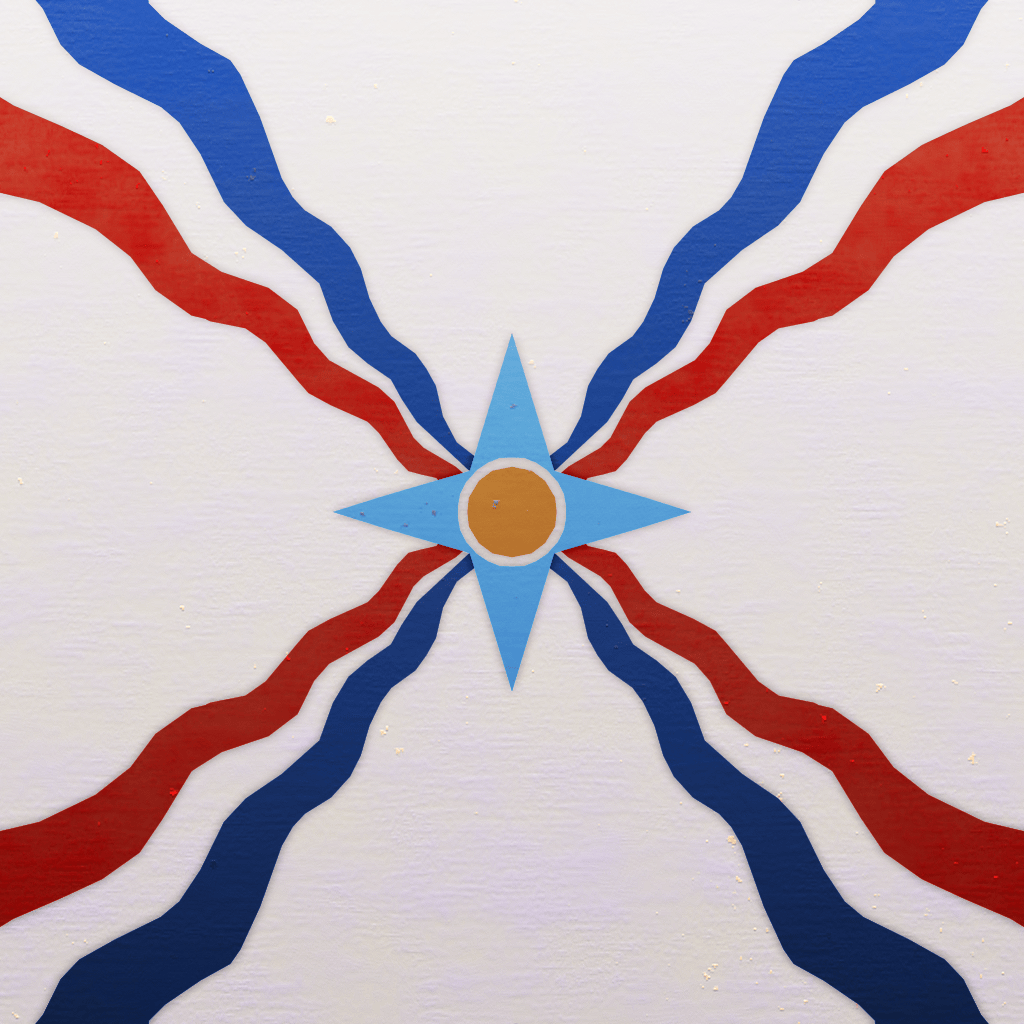
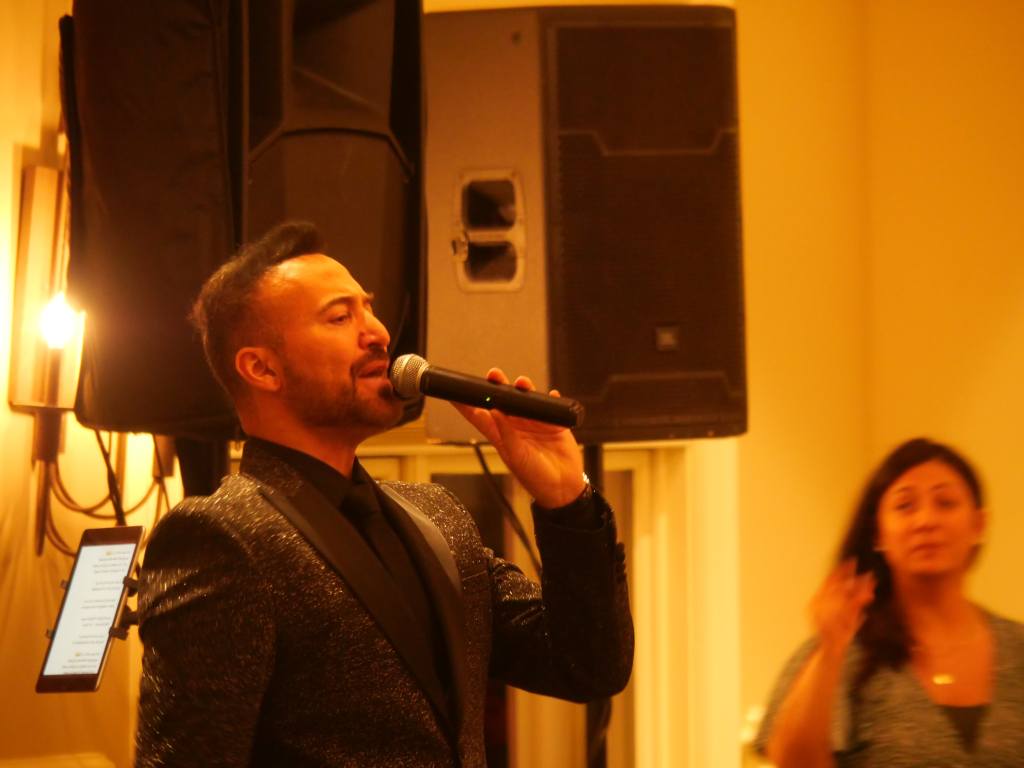
Tomorrow, April 1, marks Akitu, the Assyrian New Year. In the Assyrian calendar, the year will be 6775. A large percentage of Assyrians live as diaspora, spread throughout the world with many pockets in Europe and North America. Nonetheless, festivities remain strong around the Akitu celebration. On Saturday, Assyrian-Americans traveled across state lines for the Akitu festival in Boylston, Massachusetts—an event full of music, dance, and smiles. The high spirits of the celebration were palpable during my visit. The pervading sentiments of joy elicited a wholesomeness, spurred by the sight of Assyrian families allowing their children to play and frolic about during the event. Despite the suit-donning formality of the adults, they, too, participated in the fun. Assyrian flags were paraded in dance amidst unique cultural garbs and talented singing. This commemoration felt like a celebration of life itself, exuding foremost a pronounced liveliness.
The Assyrian people are Mesopotamian natives with a history that extends back to early civilization. Assyria is considered one of the world’s first empires and one of the most notable Mesoptomanian civilizations. The continuity between the Assyrians of the old empire and today is agreed upon by most scholars. Assyrian culture continues to be shaped by thousands of years of language, history, and tradition, bringing ancient festivals into the modern age. Nevertheless, having a deep history and continuity does not always indicate that a group will be protected. In 1933, the Assyrians were subject to the Iraqi regime’s Simele massacre, wherein hundreds or thousands of Assyrians were targeted and executed. Continuous attacks were pursued throughout the 20th century, resulting in further destruction of the Assyrian community. A recent example of these attacks was in 2015, when 16 people were killed after a series of bombings and kidnappings in Qamishli. Additionally, the Assyrian exodus from Iraq occurred in 2003 following the Iraq War, with an estimated half of the community fleeing following bombings.
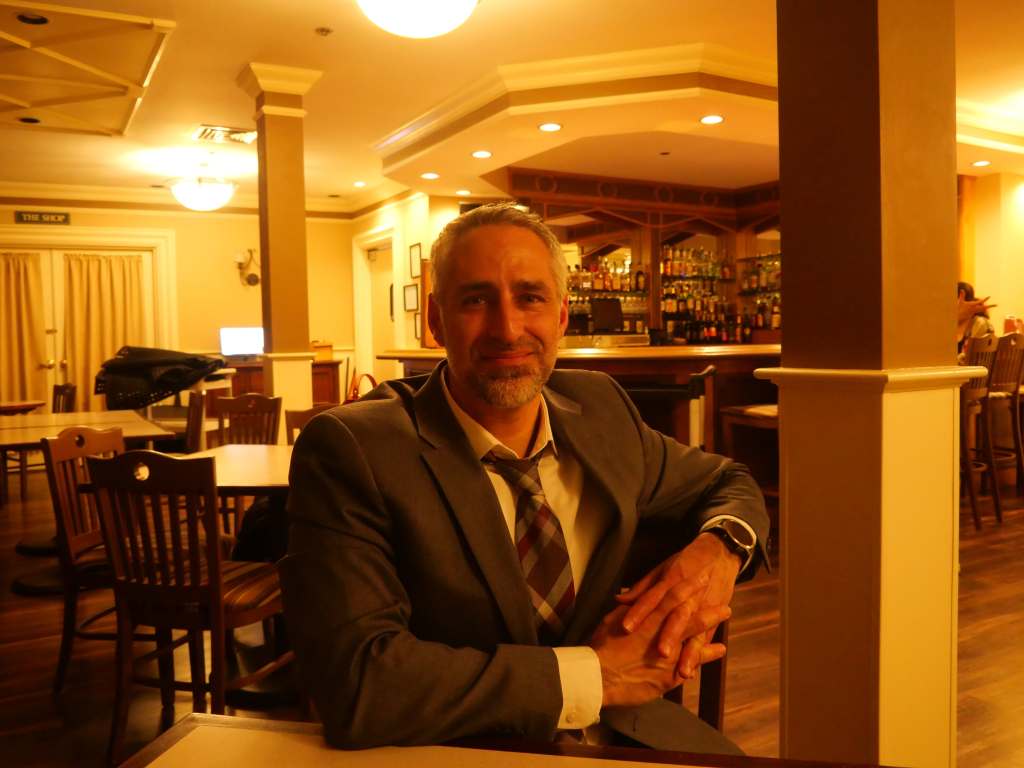
Sargon Donabed, a history professor at Roger Williams University and co-founder of the Assyrian Studies Association, offered his thoughts on the preservation of the Assyrian culture. Due to the status of Assyrian culture as one that has faced tumults in its homeland and is endangered with its diaspora, the case of Assyrian cultural preservation speaks more broadly to the idea of why a diversity of cultures should be preserved at all. The Assyrians are not only struck with violent removal and dispersal but have been ushered into the age of cultural globalization as with all others. Cultural globalization, for all its potential strengths and bridges it may draw in human understanding, exacerbates the singularization of cultural identities around the world. The rise of the internet and the lifestyle changes that have accompanied it, as well as the diffusion of American Western practices across the globe, have fortified the sense of shared experience across all groups of people. Donabed cited Lacota scholar Vine Deloria Jr., bringing attention to the fact that moving into a more technological world destroys one’s connection to the earth itself, “and when that happens, we lose pieces of who we are.” For an already endangered culture, such as the Assyrians, this may prove disastrous. Such an exacerbation proves itself dangerous in the danger of monoculture and the luster it erodes.
Upon being asked why preserving Assyrian culture is important, the professor responded, “I imagine human cultures—in a similar fashion, I know they’re not quite the same—the way I look at endangered species. And so, when we lose a particular species, whether that be flora or fauna, I feel that the world is less because of that. Less biodiverse, it is just, in effect, less. We are losing what makes the world a so wonderful and beautiful place is its diversity.” Moreover, the professor added, “Monoculture for agriculture is dangerous. You have one blight—it can destroy everything if you have monoculture. What we benefit from by having a more cultures—and distinct cultures—is it becomes a more robust human existence.” The example of monoculture is quite effective, demonstrating the danger—the vulnerability—in a lack of diversity. Diversity helps humans survive, and that is an integral aspect of the ultimate good. Where one value structure and set of customs may falter, another may flourish. It’s a matter of adaptation. Additionally, a world that is less biodiverse is simply less interesting. The intrigue of exploration is lost more and more as cultural similarity and shared experience continue to increase. Diversity brings luster to human communication that is highly sought and arguably salient to positive wellbeing. “The world becomes less for the loss of these cultures in the human community,” Donabed explained. “When numerically small species do well, that’s a good sign for the overall health of the environment.”
Land is an important aspect of any culture; people need land for their societies to operate. However, the privilege of designated land is not always granted to every group that once held it, and unfortunately, many Assyrians are in diaspora as a result of their forced displacement. “Assyrians today largely live a dispossessed reality, being disconnected from their land, overwhelmingly forcefully,” Professor Donabed explained. “[They] left because they are almost not even recognized in any of those countries… Politically speaking, there’s not a country in the Middle East that acknowledges the Assyrians as a significant cultural group. There’s not one.” The professor stressed that when people are removed from their land, their identity may fade, and they no longer feel a need to protect it. “If you’re not connected to the land, you lose a sense of who you are.” Not living in the homeland of a culture removes the investment to the land, which may carry with it many important aspects of the culture. For the Assyrians, their land is the place the ancient empire once dominated and that their ancestors have lived in for thousands of years. The works they produced and the environment they were connected to are no longer immediately present for many Assyrians.
Assyrians living among other cultures, however, is not an entirely negative development. Donabed emphasizes the newfound ability for many Assyrians to incorporate positive aspects of other cultures into their own. With the Assyrians being so spread apart, the risk their ancestors once endured is no longer present in much the same manner; one bad season of harvest can no longer damage most Assyrians. When asked about the effect that living among Western countries has had on Assyrian populations and whether or not it has been good or bad, the professor replied, “No more or less so than Assyrians in a Middle Eastern context.” Although Assyrian culture may be difficult to preserve if they do not have institutional power, Donabed reiterates that culture is not static. A static culture is stagnant and disappears; that’s not what Assyrians want Assyrian culture to be: only a fixture of the past. Speaking a different language than a group spoke thousands of years ago does not make the people any less themselves. Indians are not English just because they speak English. Cultural purity is an impossible concept because cultures are always in contact with others. Interactions in the diaspora that lead to influences are okay; they can have a positive influence. “If you still exist today—if you are still alive, and your culture is continuing—it means you have adapted.” Diaspora adapts to the new culture while retaining certain aspects of its own, and even treats aspects of its own culture in new ways. Assyrians no longer follow the ancient gods and carry Assyrian statues on Akitu; many of them are now Christian and no longer live where their forebearers once did. Adaptation is necessary to some capacity.
The Sūrayt/Sūreth language spoken by the Assyrians is endangered, leading many Assyrians to be concerned about the effects this may have on the future of Assyrian culture. “All languages are vehicles for culture, and so when you lose a language, you lose part of your culture,” Donabed responded. The professor asserted that the work done by the NEH to preserve cultures is integral and that we must support these preservation efforts. The language, the land, and the culture are all woven into each other. “For instance, there are people at this particular party who are from this area called Baadre which is in Northern Iraq… And they have 12 different names for grass, different types of grass, because they were cultivators. And many of their names from grass are connected to ancient Akkadian names; they are ancient Akkadian names that have come down. And, you know, when that disappears, when the agriculture disappears, when the connection to the land disappears, when their dialect—their language disappears, so does that connection to the ancient world which is so much of a part of who and what we are.”
Culture in the present is fluid and layered, changing in accordance with its surroundings. For diaspora communities, such an effect is often hastened. Assyrian culture is at risk for a variety of reasons, such as its eradication, cultural globalization, the loss of land, and the endangerment of its language. When faced with such risk, it is important to work to preserve the Assyrian culture as to preserve the human biodiversity of the world, harboring the process a less vulnerable and more interesting human community. Not all is lost; solutions may be provided in order to keep the Assyrian culture flourishing. There is a lack of programs in the United States to help the Assyrians and low-population cultures like them. Creating interest is an effective means of preservation, with an example being that public schools in Chicago have begun teaching Assyrian. Ideally, Assyria could have its own state to fund the preservation of its own culture, but, alas, it does not. In its place, the countries that harbor the diaspora should work to preserve it. Scholars must engage with the Assyrian community rather than only studying them from afar. The Assyrians of today have stories to be told, and they should be heard.
 De Facto Times
Leave a comment